 EN
EN

- Overview
- Quick Detail
- Description
- Applications
- Specifications
- Competitive Advantage
- Recommended Products
Overview
| Place of Origin: | Jiangsu China |
| Brand Name: | SINA EKATO |
| Model Number: | RO |
| Certification: | ISO9001, CE |
| Minimum Order Quantity: | 1 Set |
| Packaging Details: | Standard Export Wooden Case |
| Delivery Time: | 30-40 working days |
| Payment Terms: | T/T, L/C, |
| Supply Ability: | 500-20000 |
Quick Detail
· Alternative Names: RO Water Purifier, Industrial Water Treatment Plant, Pure Water System, Reverse Osmosis Filtration.
· Main Applications: Used to remove ions, bacteria, and organic matter from raw water to produce high-purity water for cosmetics, pharmaceuticals, and food production.
· Core Specifications: Capacity 0.5T/H to 20T/H, Recovery rate 55%-76%, One/Two-stage RO options, EDI system optional.
Description
Core Working Principle
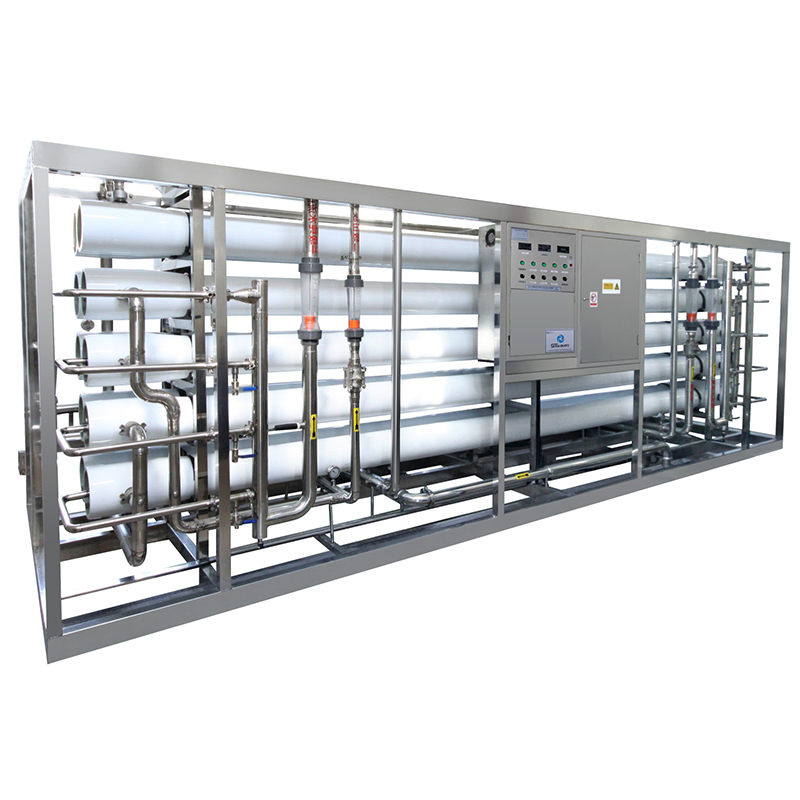
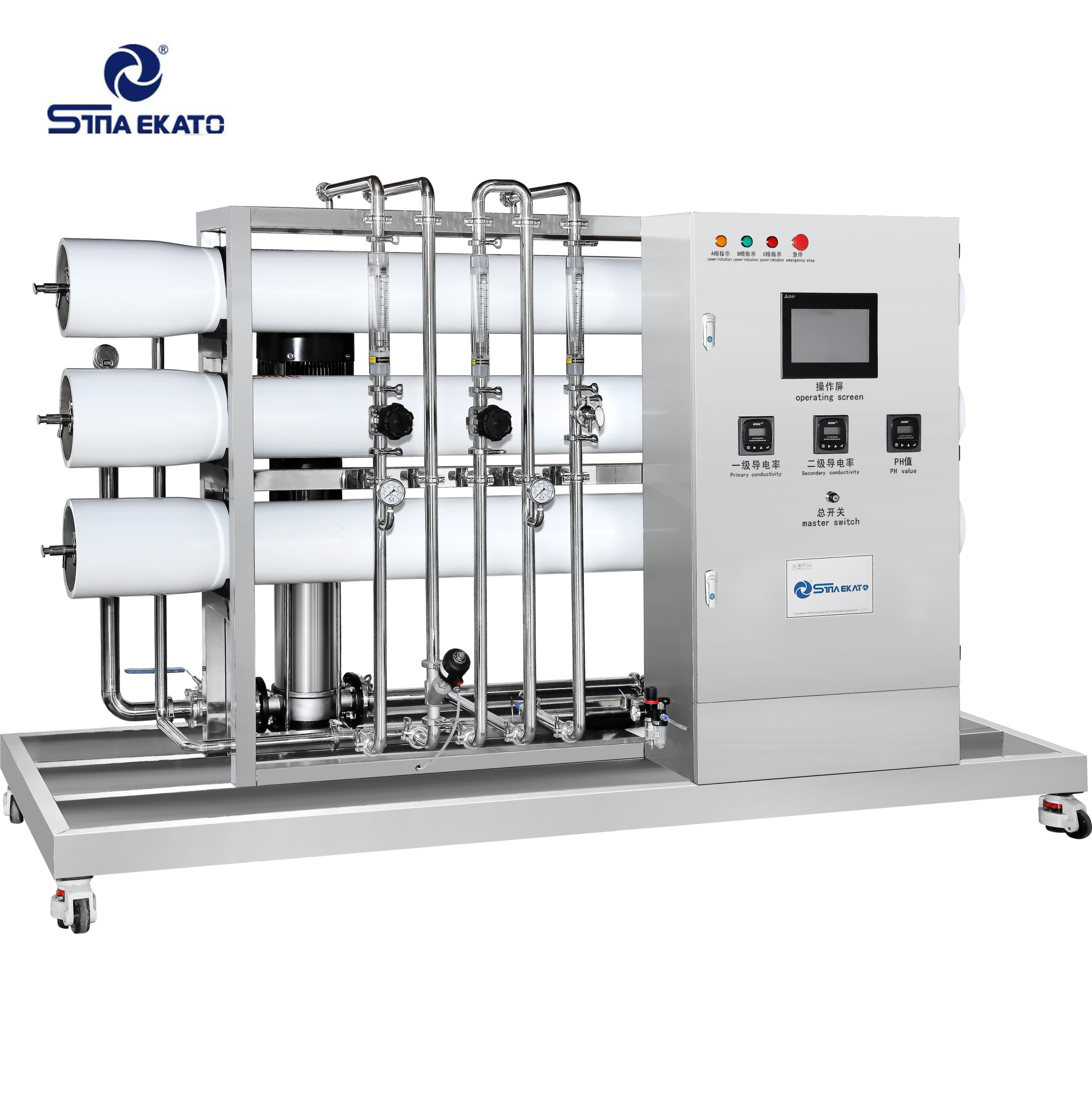
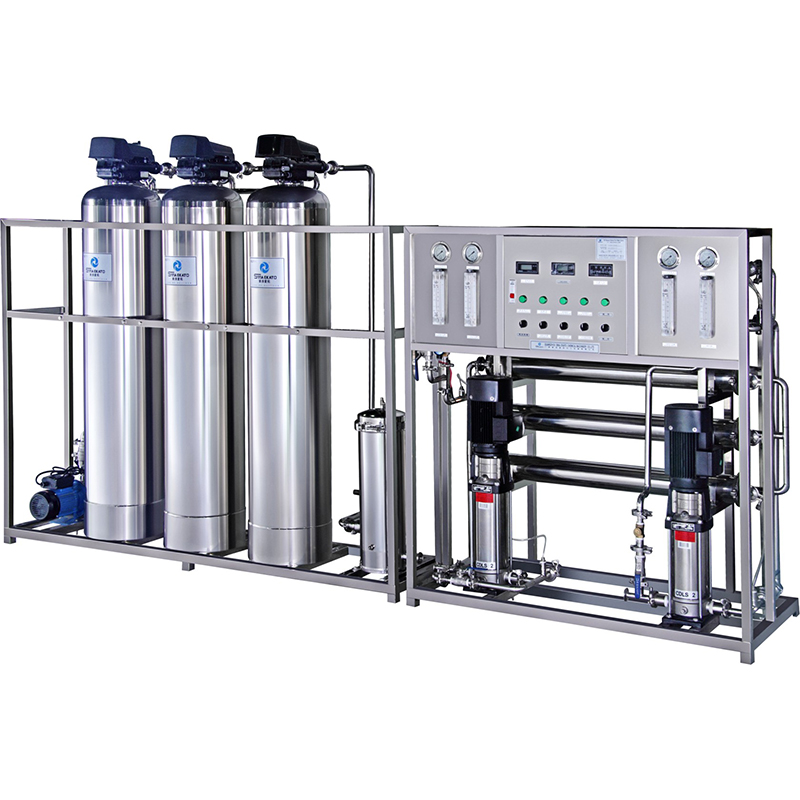
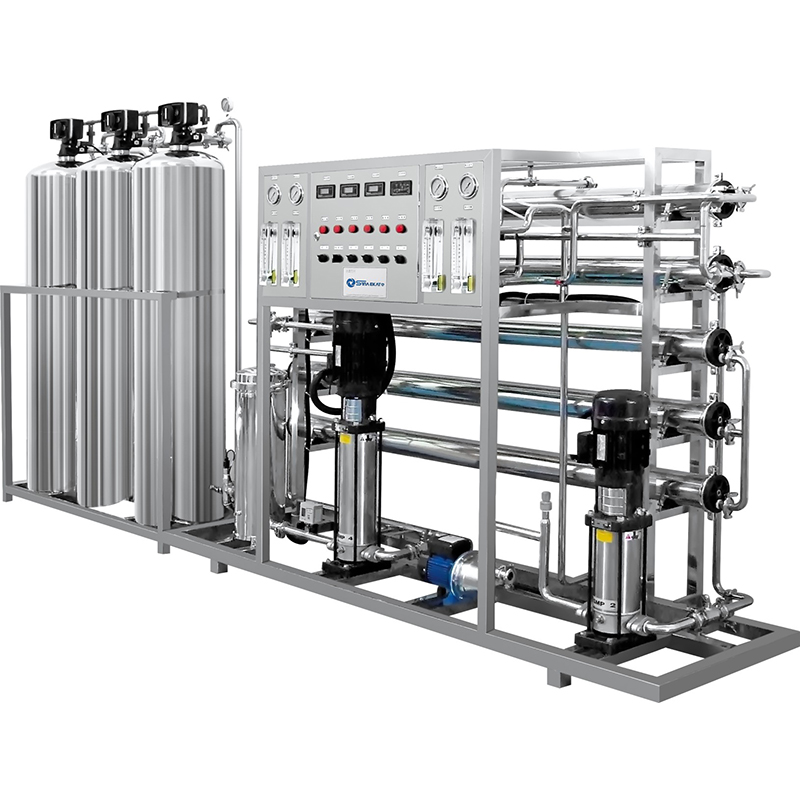
Complete System Composition
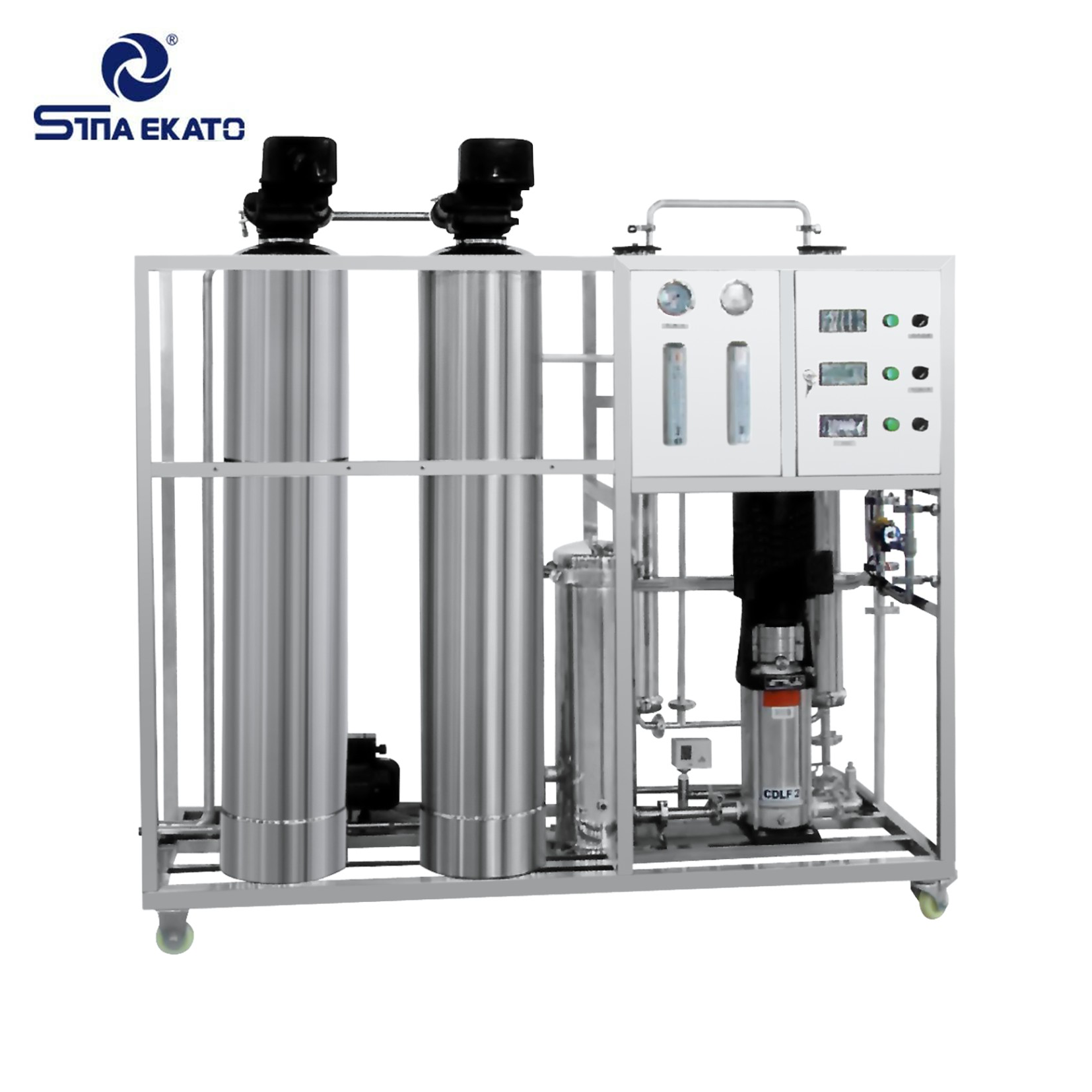
- Raw Water Pretreatment Unit The pre-treatment is the foundational guarantee to protect the reverse osmosis membrane and ensure the stable operation of the whole system, which is used to remove suspended solids, turbidity, residual chlorine, colloids, iron and manganese ions from raw water. Common equipment includes quartz sand filters, activated carbon filters, precision filters (5μm/1μm), softeners, and anti-scaling dosing devices. This unit effectively prevents membrane fouling, oxidation, and physical damage, extending the service life of the RO membrane.
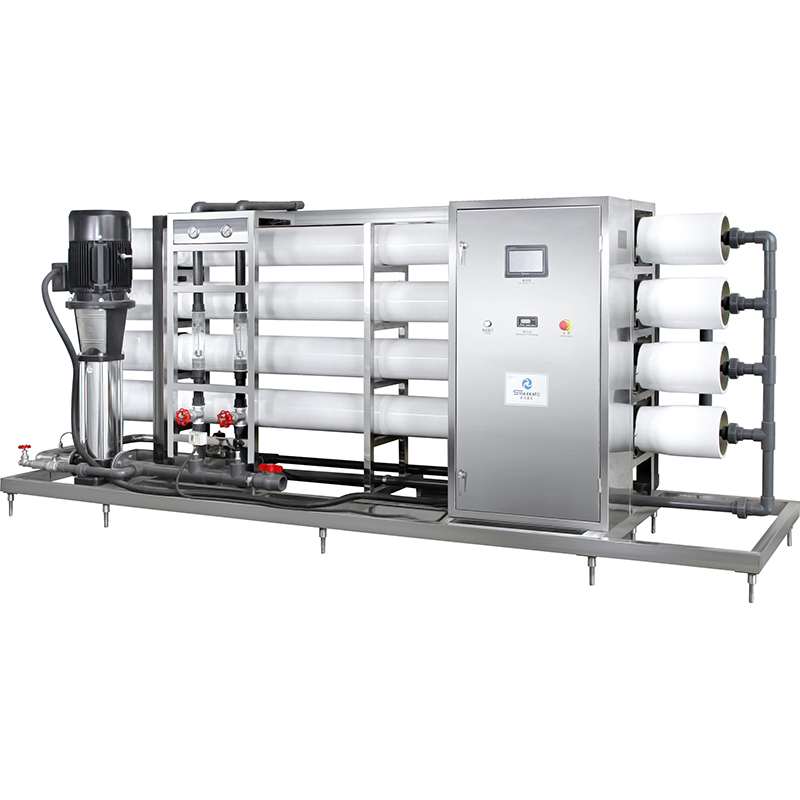
- High-Pressure Pump Unit As the power core of the RO system, the high-pressure pump provides a stable and adjustable working pressure that meets the reverse osmosis process requirements (the working pressure is usually 1.0-4.0MPa for brackish water desalination, and 5.0-8.0MPa for seawater desalination). It adopts industrial-grade high-pressure centrifugal pumps or plunger pumps with high efficiency, low noise, and stable operation, equipped with pressure protection devices to avoid system damage caused by overpressure or underpressure.
- RO Membrane Module Unit The core separation component of the system, the RO membrane module is usually composed of spiral-wound composite membranes (the most widely used type in the industry) and pressure vessels. The spiral-wound composite membrane has the advantages of high water production flux, high salt rejection rate, and good chemical stability. Membrane modules are configured in parallel/series according to water production capacity, and the common membrane specifications include 4-inch and 8-inch. The salt rejection rate of industrial-grade RO membranes can reach more than 98%, and the removal rate of bacteria, viruses, and heavy metals is close to 100%.
- Product Water & Concentrated Water Unit This unit is responsible for the collection, transportation, and pressure regulation of the purified product water and the discharged concentrated water. It is equipped with product water tanks, pressure gauges, flow meters, and concentrated water regulating valves. The concentrated water regulating valve can adjust the recovery rate of the system (the water recovery rate of industrial RO systems is usually 70-85%) according to the actual working conditions, and the concentrated water can be recycled or discharged up to standard after secondary treatment to realize water resource utilization.
- Cleaning & Maintenance Unit Including cleaning water tank, cleaning pump, chemical dosing device, and cleaning pipeline, it is used for online/offline chemical cleaning of the RO membrane module. After long-term operation, the membrane surface will produce organic/inorganic fouling and microbial adhesion, leading to the decrease of water production flux and salt rejection rate. Regular cleaning with acid/alkali cleaning agents (such as citric acid, sodium hydroxide) can restore the membrane performance and ensure the long-term stable operation of the system.
- Automatic Control Unit Adopts PLC (Programmable Logic Controller) + touch screen integrated control system, which can realize automatic start and stop of the whole system, real-time monitoring of key parameters (inlet/outlet pressure, water production flow, conductivity, pH value), automatic alarm and protection of abnormal conditions (overpressure, low flow, high conductivity), and automatic backwashing of pretreatment equipment. The system supports manual/auto switching, with high automation degree, reducing manual operation and management costs.
Key Technical Characteristics
- Ultra-high purification efficiency : The salt rejection rate is over 98%, and it can effectively remove heavy metal ions (e.g., lead, mercury, chromium), bacteria, viruses, organic matter, and colloids in water, with the purified water conductivity as low as 1-10μS/cm (pure water) or even lower (ultra-pure water after secondary treatment).
- Physical separation process : No chemical additives are needed in the core purification process, avoiding secondary pollution of water quality, and the product water quality is stable and reliable without chemical residues.
- Wide adaptability of raw water : It can handle various raw water sources, including tap water, groundwater, surface water (river water, lake water), brackish water, and seawater, and is suitable for different water treatment scenarios such as desalination, purification, and wastewater reuse.
- High automation and easy operation : The integrated automatic control system realizes unmanned operation under normal working conditions, with real-time data display and fault alarm, and the daily maintenance is simple and convenient.
- Energy-saving and environmental protection : The modular design of the system saves installation space, and the concentrated water can be recycled, which improves the utilization rate of water resources; the core equipment (high-pressure pump, membrane module) adopts energy-saving models, reducing the overall energy consumption of the system.
- Durable and stable operation : The key components are made of industrial-grade corrosion-resistant and high-pressure resistant materials (e.g., stainless steel, FRP), with a long service life; the system has a perfect protection mechanism, which can adapt to the fluctuation of raw water quality and working conditions, and the operation is stable and reliable.
Typical Application Scenarios
- Chemical & Pharmaceutical Industry : Production of pure water/ultra-pure water for raw material preparation, reaction kettle cooling, pharmaceutical injection, and cosmetic production (e.g., lotion, shampoo, skin care products), meeting the GMP and industrial production water quality standards.
- Daily Chemical Manufacturing : Purification of production water for detergents, surfactants, and personal care products, avoiding the impact of impurities in water on product quality and performance.
- Electronic Industry : Production of ultra-pure water for semiconductor manufacturing, circuit board cleaning, and electronic component processing, with strict requirements for water conductivity and impurity content.
- Food & Beverage Industry : Pure water for beverage production, wine brewing, and dairy product processing, ensuring food safety and product taste.
- Industrial Wastewater Reuse : Desalination and purification of industrial wastewater (e.g., chemical wastewater, printing and dyeing wastewater), realizing the recycling of water resources and reducing environmental pollution and water resource consumption.
- Municipal & Commercial Water Supply : Drinking water purification in residential areas, commercial plazas, and hotels, especially in areas with high groundwater salinity or poor surface water quality.
- Power Generation Industry : Boiler make-up water purification for thermal power plants and nuclear power plants, avoiding boiler scaling and corrosion caused by impurities in water.
Daily Operation & Maintenance Key Points
- Regularly monitor the key parameters of the system (inlet pressure, water production flow, conductivity, concentrated water ratio) and record the data to track the operation status of the membrane module.
- Regularly backwash the pretreatment equipment (quartz sand filter, activated carbon filter) to ensure the pre-treatment effect and prevent membrane fouling.
- Strictly control the raw water quality index (turbidity, residual chlorine, pH value) to avoid membrane oxidation and physical damage caused by excessive residual chlorine and high turbidity.
- Perform chemical cleaning of the RO membrane module on schedule (usually every 3-6 months, adjusted according to the actual operation status) to remove fouling and restore membrane performance.
- Keep the system in a wet state when it is shut down for a long time, and add protective fluid to the membrane module to prevent membrane drying and microbial growth.
- Regularly inspect the sealing parts, valves, and pipelines of the system to avoid water leakage and pressure loss.
Applications
· Cosmetics: Base water for lotions, creams, shampoos, and perfumes.
· Pharmaceuticals: Purified water for medical formulations and equipment cleaning.
· Electronics & Chemicals: Ultra-pure water for chemical synthesis and component washing.
· Food & Beverage: Purified water for drinking, food processing, and brewing.
Specifications
| Model | Capacity (T/H) | Power (KW) | Recovery Rate (%) | One Stage Conductivity | Two Stage Conductivity |
| RO-500 | 0.5 | 0.75 | 55-75% | ≤10μs/cm | 2-3μs/cm |
| RO-1000 | 1.0 | 2.2 | 65-75% | ≤10μs/cm | 2-3μs/cm |
| RO-2000 | 2.0 | 4.0 | 65-75% | ≤10μs/cm | 2-3μs/cm |
| RO-5000 | 5.0 | 7.5 | 65-76% | ≤10μs/cm | 2-3μs/cm |
| RO-10000 | 10.0 | 11.0 | 65-76% | ≤10μs/cm | 2-3μs/cm |
Competitive Advantage
· High Efficiency & Low Energy: Operates without heating or phase change, consuming significantly less energy than traditional distillation methods.
· Modular Pre-filtration: Features a comprehensive pre-treatment system (Sand, Carbon, Softener) that significantly extends the lifespan of the RO membranes.
· Superior Water Quality: Capable of removing over 98% of dissolved salts and 99% of bacteria/pyrogens. Optional EDI system can achieve even lower conductivity (≤0.5μs/cm).
· Full Stainless Steel Construction: Ensures the system is rust-proof, easy to sanitize, and compliant with industrial hygiene standards.
· Smart Operation: Fully automatic operation with pressure protection, water level sensors, and real-time conductivity monitoring.