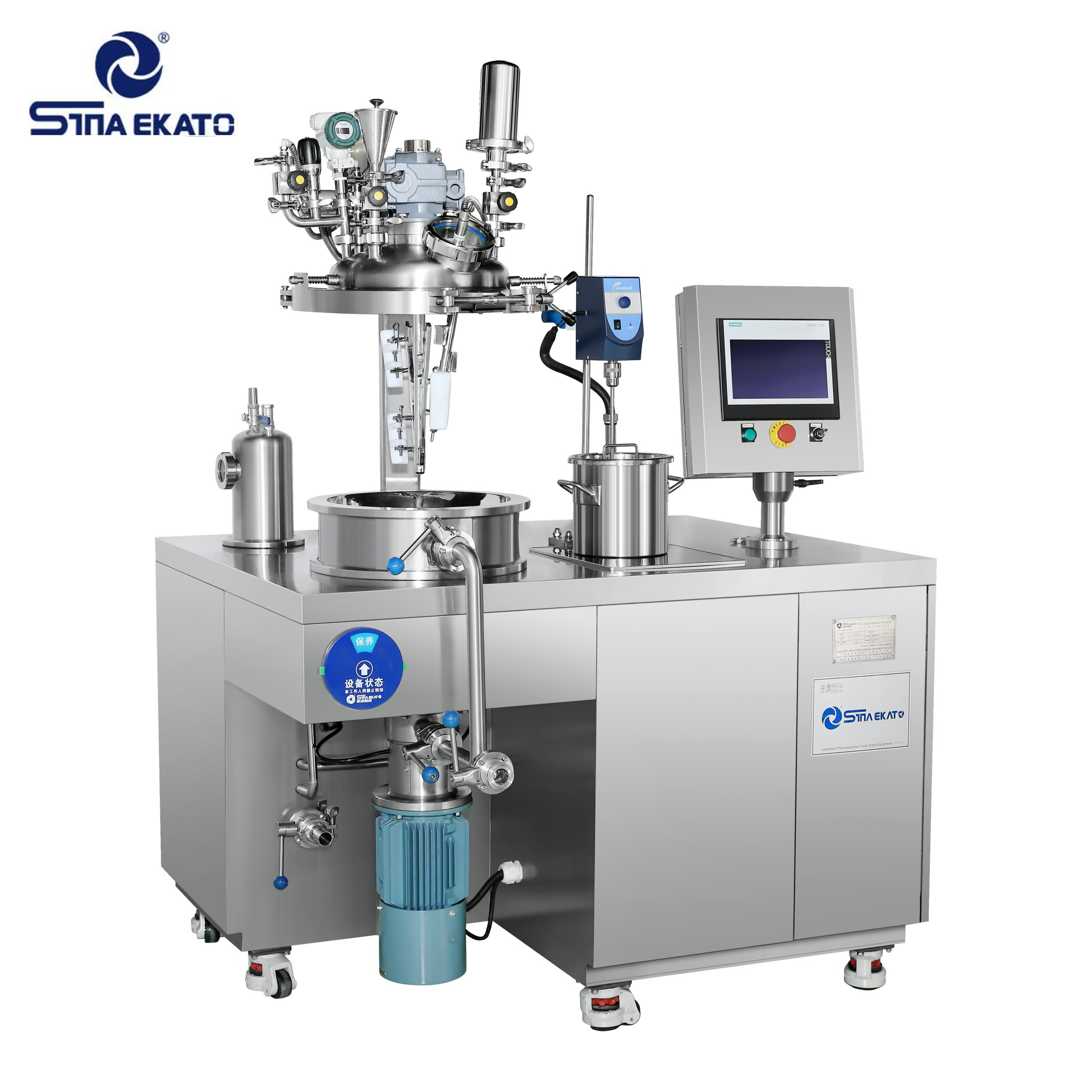
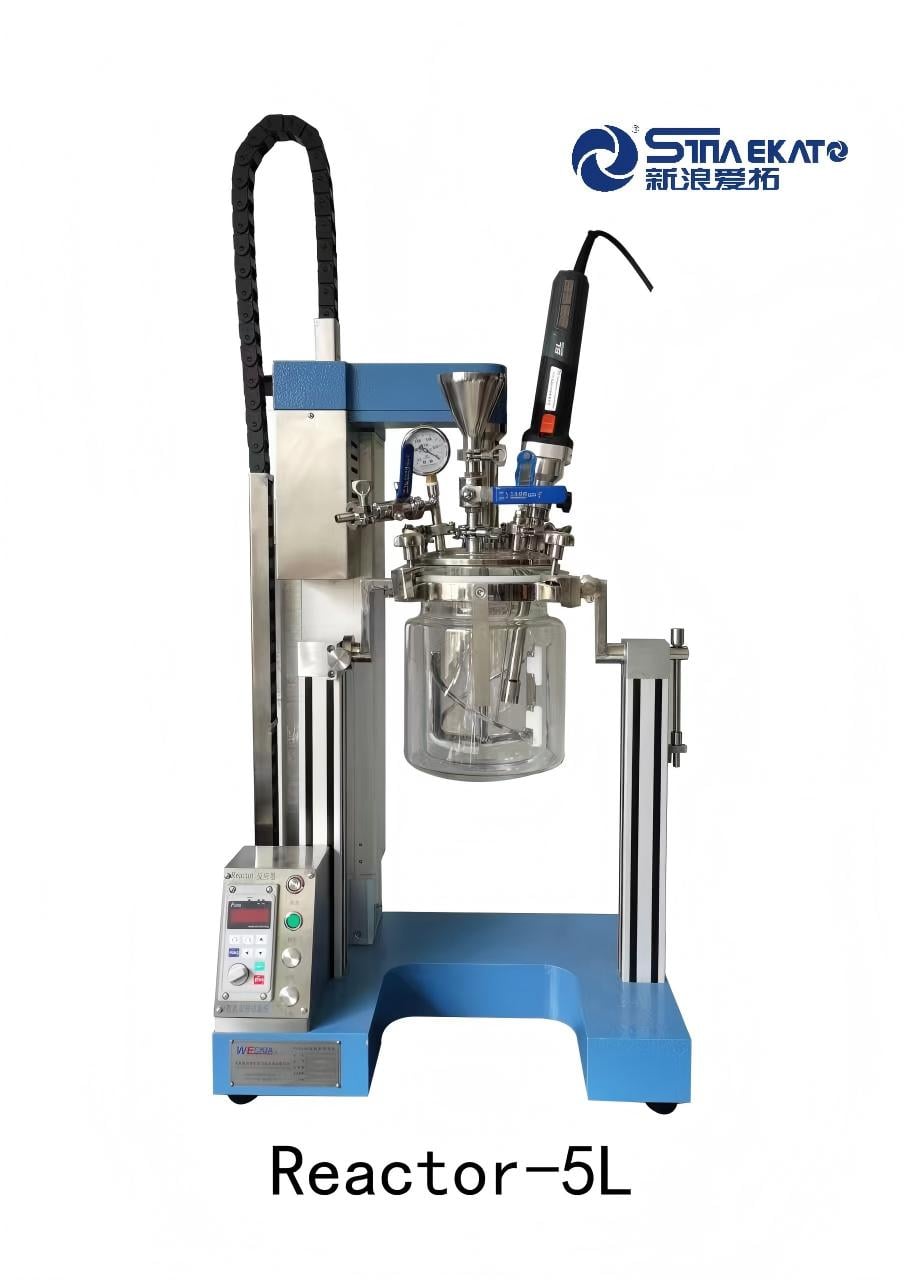
The core of the unit is a high-borosilicate transparent glass reactor tank matched with a 316L stainless steel sealed tank cover, enabling full visual observation of the entire material process including dissolution, dispersion, emulsification, gelation, layering and defoaming. The supporting dry vacuum pump creates a negative-pressure vacuum environment with two core functions:
(1)Vacuum defoaming: Eliminates air bubbles generated during stirring and homogenization, delivering smooth, pore-free cream with improved texture and appearance.
(2)Negative-pressure feeding: Powders and oil raw materials can be sucked into the tank under vacuum, preventing dust dispersion and reducing risks of raw material oxidation and contamination. The tank cover is integrated with a pressure gauge, feeding port, sampling port and cleaning connector, supporting mid-batch supplementary feeding and real-time sampling to observe formula changes.
2. Dual-power Compound Homogenizing & Stirring System
Two independently controlled driving units deliver superior process adaptability:
(1)Low-speed frame agitator: Suitable for high-viscosity creams, gels and wax-based raw materials. It fully mixes bulk materials to prevent wall adhesion and local overheating, with adjustable rotation speed for thick system homogenization.
(2)Side-mounted high-shear homogenizer head: Breaks oil-water phases and powder fillers at high rotational speed to complete micron-level emulsification and dispersion rapidly, resolving common formula defects such as stratification, coarse particles and uneven suspension. The two systems can operate separately or synchronously to flexibly match different process stages including aqueous phase preparation, oil phase melting, emulsification and thickening.
The external thermostatic circulating water bath is connected to the interlayer of the glass reactor via pipelines to realize closed-loop heating and cooling circulation:
(1)Wide temperature range: Supports low-temperature cooling, medium-temperature emulsification and high-temperature wax melting to cover all cosmetic processing techniques.
(2)Digital display delivers precise temperature control with minor fluctuation. It protects heat-sensitive active ingredients (vitamins, plant extracts, peptides) via low-temperature emulsification, while enabling high-temperature melting and homogenization for waxes and solid oils.
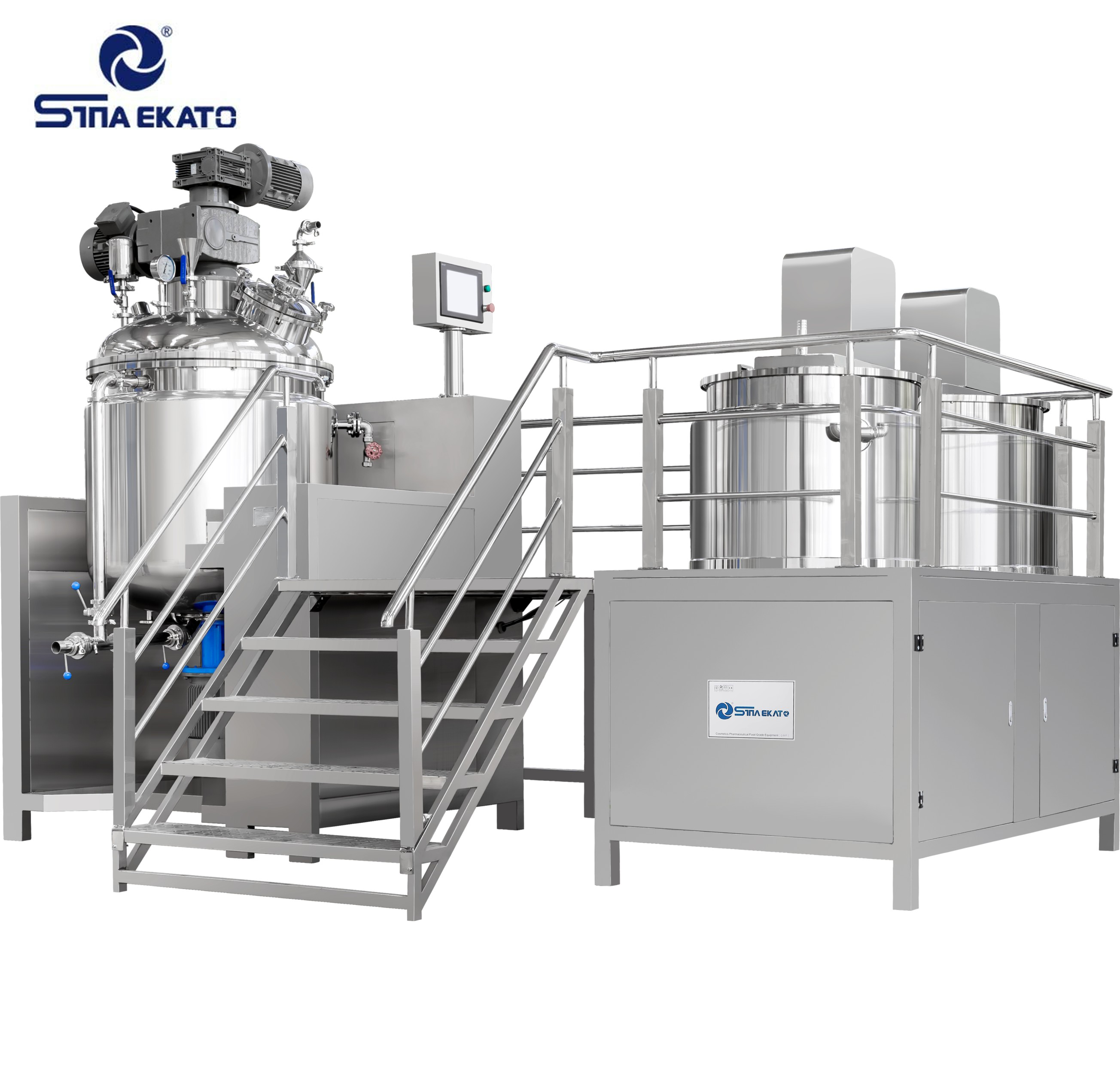
The complete machine adopts an electric lifting bracket to lift the reactor tank quickly. The tank body, stirring paddle and homogenizer head are all detachable without dead angles for cleaning, eliminating cross-contamination between different formulas. A touch control panel and red emergency stop button are installed on the top to monitor rotation speed and running time in real time, ensuring safe and simple operation that can be completed by a single technician for full small-batch trials.
With lab-scale small volume capacity, the reactor only requires hundreds to two thousand milliliters of raw materials per trial. It enables fast adjustment of emulsifier ratio, oil system, thickener system and active ingredient dosage, drastically reducing consumption of costly raw materials and actives. The transparent tank allows direct recording of material phase transition phenomena (stratification, thickening, gelation, pearlescent precipitation) and accurate logging of process parameters including temperature, stirring/homogenization duration, forming standardized experimental data.
2.1 Cream series: Facial cream, eye cream, men’s skincare cream, sunscreen cream, cleansing balm and massage cream. The combination of frame stirring and high-shear homogenization suits high-viscosity systems, while vacuum defoaming achieves dense and smooth cream texture.
2.2 Lotion & essence series: Moisturizing lotion, repairing essence, tinted moisturizer and body milk. Gentle homogenization avoids deactivation of active ingredients, and precise temperature control preserves efficacy components.
2.3 Gel series: Aloe vera gel, anti-acne gel and hyaluronic acid gel. Low-temperature vacuum stirring produces transparent, bubble-free gel.
2.4 Special efficacy products: Medicated topical ointment, freckle cream, sunscreen system and powder-suspending foundation. Vacuum powder feeding solves powder agglomeration and sedimentation issues.
All key experimental data recorded during R&D, including heating curve, homogenization speed & duration, vacuum degree, stirring rate, feeding sequence and cooling end temperature, can be directly converted into process parameters for mass-production equipment. This solves the industry-wide pain point of inconsistent finished product properties caused by mismatched lab trial and mass production processes.
The stirring & shearing structure, vacuum system and temperature control logic of this lab reactor share identical design principles with industrial stainless steel vacuum emulsifiers. The emulsification ratio, temperature, shearing time and vacuum parameters confirmed in small trials can be directly applied to 50L/100L/500L mass-production equipment, eliminating repeated re-adjustment and shortening the new product launch cycle.
Before formal mass production, full pilot-scale simulation can be carried out on this reactor, replicating industrial feeding sequence, heating & cooling rhythm and homogenization workflow. It pre-emptively identifies common mass-production problems such as stratification, water separation, bubbles, coarse particles and unqualified viscosity, allowing process optimization in the R&D stage to avoid massive raw material waste and loss.
3.1 Iterative optimization of mature mass-production formulas: Adjust emulsification systems and temperature control processes to improve texture and stability of commercial products, generating revised samples rapidly.
3.2 Custom sample fabrication for clients: Fast production of tailored creams, essences and washing samples for customer evaluation and exhibition display to support market expansion.
3.3 Raw material compatibility testing: Conduct compatibility & stability tests for newly incoming emulsifiers, oils, preservatives and thickeners in advance to eliminate risks such as discoloration, stratification and odor deterioration.
Material-contact components consist of high-borosilicate glass and 316L stainless steel, which can be disassembled, cleaned and sterilized. The equipment meets GMP cleanliness standards for cosmetic R&D, aligning lab management requirements with mass-production workshop hygiene control from the source to guarantee microbial stability of finished products.
This integrated R&D glass reactor integrates vacuum defoaming, dual-power homogenization, precise heating & cooling temperature control and visual reaction observation, serving as the core equipment for the complete R&D workflow of cosmetic manufacturers. It supports new formula development, raw material compatibility testing and custom sample fabrication in the front-end R&D stage; completes pilot process verification and mass-production parameter finalization in the mid-stage; and enables continuous iteration of mature mass-produced goods in the back-end. The unit connects the full industrial chain from laboratory R&D and pilot scaling to large-scale manufacturing, effectively reducing R&D costs, shortening new product development cycles and mitigating mass production process risks. It is fully applicable to the R&D and production of skincare, sunscreen, medicated cosmetics and men’s personal care products.

Welcome to Sina Ekato, a leading machinery manufacturer with 30+ years of experience. We provide turnkey production solutions for cosmetic, pharma, and food globally.
Baqiao industrial park, Gaoyou, Yangzhou city, Jiangsu province, China
Copyright © Sina Ekato Chemical Machinery Co.,Ltd. All Rights Reserved Privacy Policy Blog
 EN
EN