Installation for Emulsification Equipment (Hangzhou Site)
Installation Location: Hangzhou, China
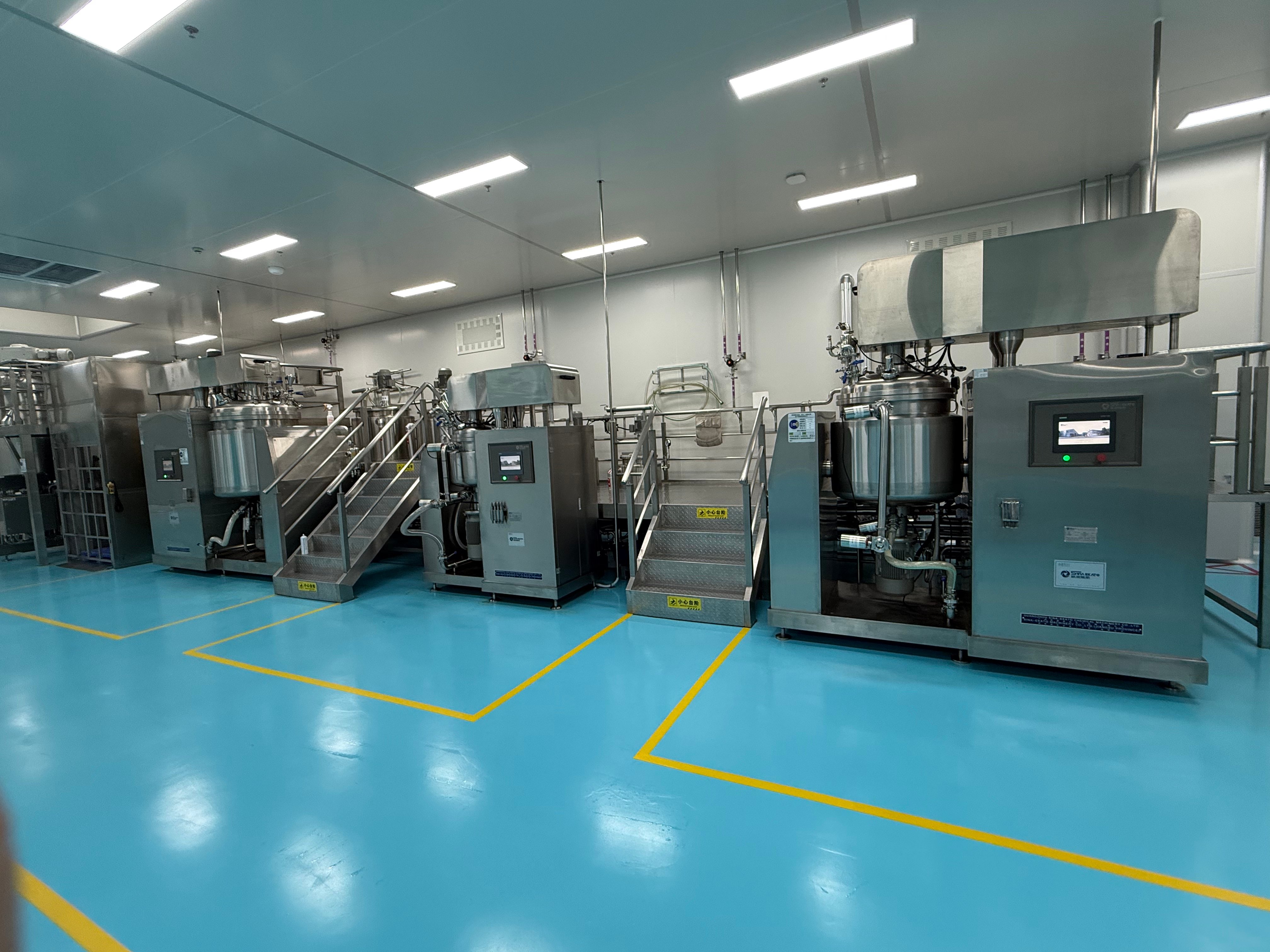
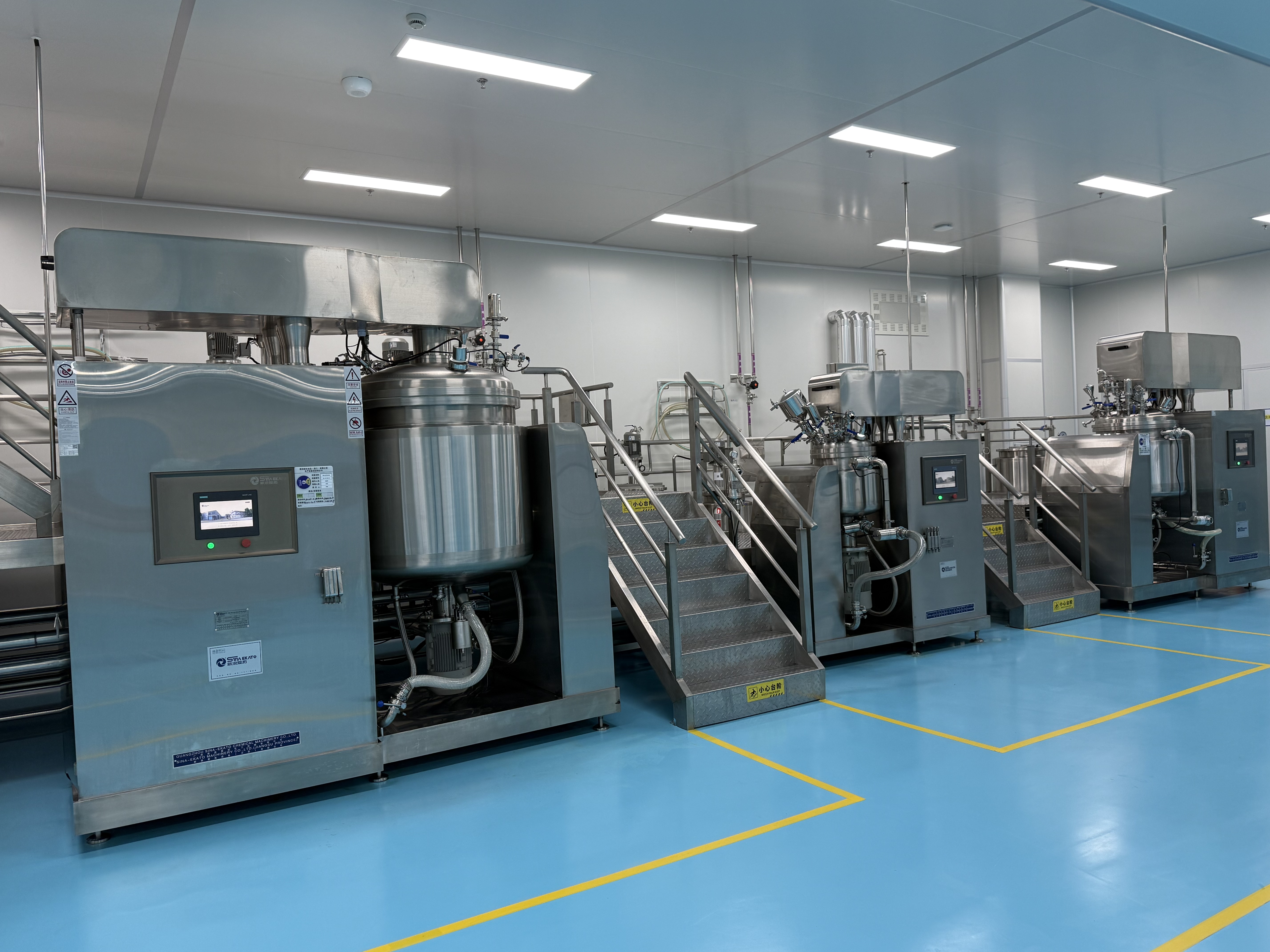
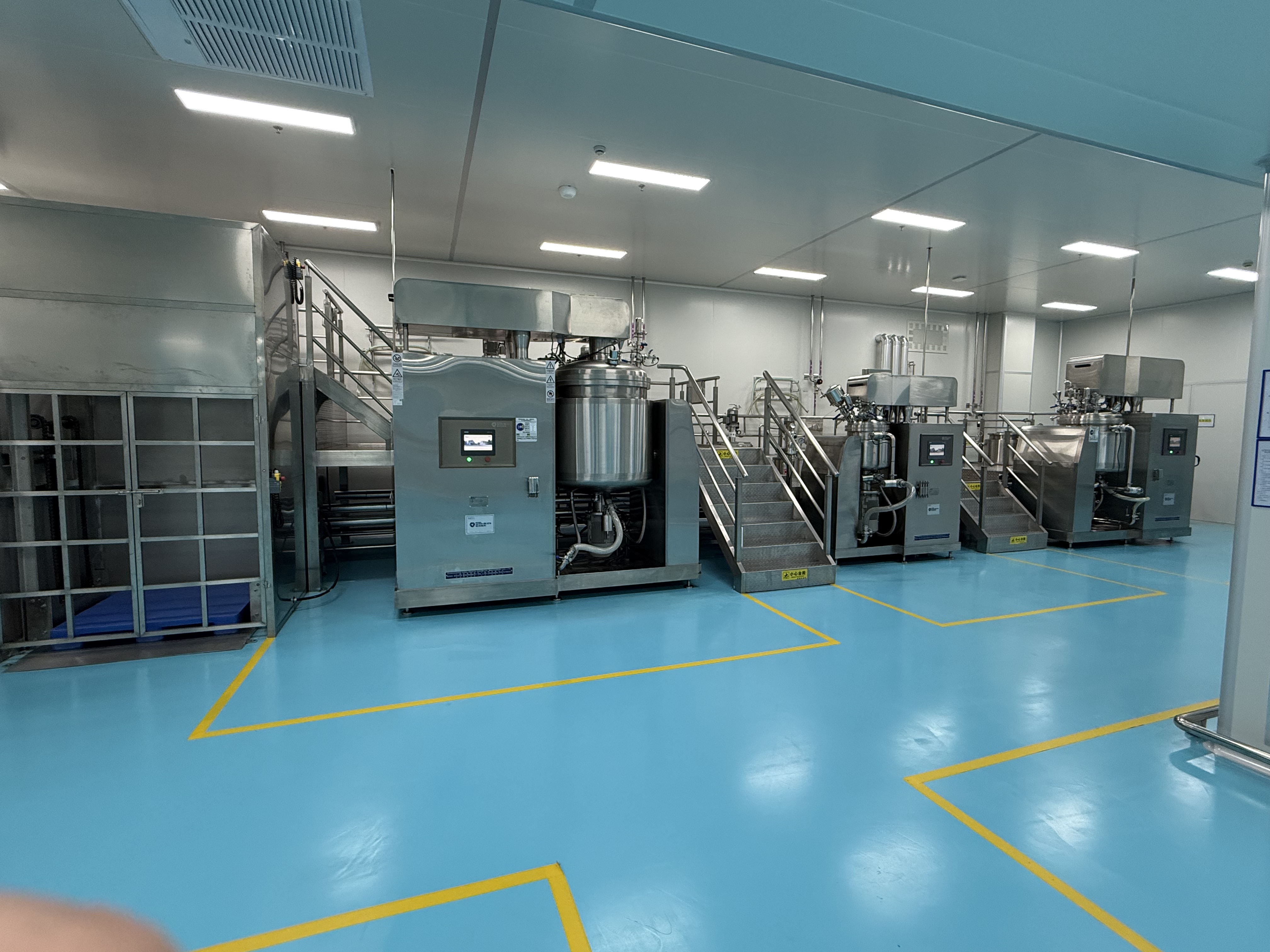
Equipment List: 50L, 200L, 500L, 1000L Emulsification Tanks, Lifting Emulsifier Machine, Operation Platform, Medium Pipeline System
1. Overview
This manual specifies the standardized installation procedures, site requirements, safety precautions, and commissioning standards for a complete set of emulsification equipment deployed at the production site in Hangzhou. The equipment package includes four specification emulsification tanks (50L, 200L, 500L, 1000L), a supporting lifting emulsifier machine, matched operation platform and complete medium pipeline system, which is widely applicable to fine chemical, cosmetic, food, and pharmaceutical emulsification production processes. Strict compliance with the following installation procedures ensures stable equipment operation, qualified emulsification performance, long service life, and full compliance with on-site production safety and environmental specifications in Hangzhou.
2. Pre-Installation Preparation
2.1 Site Environment Requirements
The installation site is located in Hangzhou’s standard production workshop, which must meet the basic environmental conditions for emulsification equipment operation. The workshop shall be dry, well-ventilated, and dust-free, with no corrosive gas, flammable and explosive substances around. The ambient temperature shall be controlled within 5℃–40℃, and the relative humidity shall not exceed 85% to avoid moisture damage to electrical components and mechanical parts. A spacious operating and maintenance area shall be reserved around each device to facilitate subsequent equipment inspection, cleaning, maintenance and material handling.
The ground foundation must be flat, solid, and load-bearing, with sufficient strength to bear the full weight of the equipment (including empty tank and full-load operating weight). The ground flatness error shall be controlled within ±3mm to ensure the overall stability and levelness of the equipment, preventing equipment vibration, liquid leakage, and uneven emulsification effect caused by inclination during operation.
2.2 Utilities and Auxiliary Conditions
Complete supporting utilities shall be configured before installation, including stable industrial power supply, circulating cooling water pipeline, compressed air pipeline, and sewage discharge pipeline. The power supply voltage shall match the equipment rated parameters, with reliable grounding devices to prevent electric leakage accidents. All pipeline interfaces shall be pre-reserved and cleaned to ensure no sundries, welding slag or impurities inside, avoiding pipeline blockage and equipment component damage after connection.
2.3 Equipment and Tool Inspection
Unpack all equipment components (emulsification tanks, lifting emulsifier host, stirring shaft, rotor-stator homogenizing head, control cabinet, connecting pipelines, fasteners, etc.) and conduct a comprehensive inspection. Check whether the equipment shell, mechanical parts and electrical components are damaged, deformed or loose during transportation. Verify the complete set of accessories and spare parts in accordance with the equipment packing list. Confirm that the sealing parts, homogenizing components and electrical circuits are intact and free from defects.
Prepare professional installation tools, including level meter, wrench set, torque wrench, screwdriver, level ruler, pipeline cutting and connecting tools, as well as safety protection supplies such as insulating gloves and safety helmets. Arrange professional installation and commissioning personnel with mechanical and electrical operation qualifications to carry out the construction work.
3. Formal Installation Procedures
3.1 Emulsification Tank Positioning and Fixing
Install the four emulsification tanks of 50L, 200L, 500L and 1000L in sequence according to the on-site process layout. Place the tanks stably on the pre-planned installation position of the workshop ground. Adjust the tank body level with a level meter strictly to ensure the horizontal balance of the tank body, which is the key to guaranteeing uniform stirring and emulsifying effect. After level calibration, fasten the bottom fixing bolts to lock the tank body firmly, eliminate equipment shaking and displacement risks during high-speed operation.
Classify and arrange the tanks by specification to reserve a matching operating space for the supporting lifting emulsifier. Ensure that the tank feeding ports, discharging ports, cooling water ports and vacuum interfaces are reserved in consistent directions, which is convenient for subsequent pipeline connection and equipment linkage operation. All tank body support feet shall be uniformly stressed to avoid local deformation of the tank body caused by uneven stress.
3.2 Lifting Emulsifier Machine Installation
The lifting emulsifier is the core homogenizing equipment matched with all specifications of emulsification tanks. First, install the lifting frame base stably on the side of the emulsification tank group, calibrate the verticality and levelness of the lifting frame, and fix the base with expansion bolts to ensure strong bearing capacity and no shaking during lifting and descending operation.
Install the emulsifier host motor and lifting transmission device on the lifting frame, adjust the lifting stroke to match the depth of 50L to 1000L tanks, ensuring that the homogenizing head can fully extend into the tank liquid level and can be lifted smoothly for cleaning and maintenance. Install the rotor-stator homogenizing assembly correctly, ensure the concentricity of the stirring shaft and the motor, fasten all connecting bolts in diagonal order uniformly to avoid loose parts during high-speed rotation.
Check the lifting flexibility manually to ensure no jamming, stagnation and abnormal noise during the lifting and descending process. Verify the positioning accuracy of the lifting device to ensure the emulsifier can be accurately locked at the working position and maintenance position.
3.3 Operation Platform, Medium Pipeline and Circuit Connection
Install the customized stainless steel operation platform first to match the overall layout of the emulsification tank group. The operation platform is designed for daily operation, feeding, sampling, equipment inspection and maintenance of 50L to 1000L emulsification equipment. Fix the platform support frame firmly on the reserved ground foundation, calibrate the overall levelness and verticality, and ensure the platform bears uniform force without shaking or deformation. Install anti-slip platform plates, protective guardrails and safety toe boards in accordance with industrial safety standards to eliminate falling risks. Reserve reasonable operation openings and maintenance gaps corresponding to the tank covers, feeding ports and observation ports of all emulsification tanks to facilitate convenient and safe daily operation.
Subsequently, install the complete medium pipeline system covering material feeding, discharging, circulating and medium conveying for all emulsification tanks. All medium pipelines adopt food/chemical grade pipeline materials matching production standards, with smooth inner walls, no corrosion and no impurities. Lay out the pipelines in a standardized and classified manner according to process sequence, avoid cross and chaotic laying, and set independent pipeline supports and fixing hangers to prevent pipeline deformation, vibration and interface stress damage. All pipeline connections adopt sealed butt joint standards, with matching gaskets and sealing parts installed to ensure no medium leakage during operation. Install necessary process valves, flow monitoring components and filter assemblies on medium pipelines to realize controllable medium conveying and ensure the stability of emulsification production process.
Wire the control cabinet, emulsifier motor, lifting system and sensor equipment professionally. Standardize the wiring layout, fix the circuit wires neatly, and do a good job of waterproof and anti-corrosion protection. Complete the equipment grounding work reliably to meet electrical safety standards. After wiring, check the circuit connectivity to eliminate short circuit, open circuit and wrong wiring hidden dangers.
Wire the control cabinet, emulsifier motor, lifting system and sensor equipment professionally. Standardize the wiring layout, fix the circuit wires neatly, and do a good job of waterproof and anti-corrosion protection. Complete the equipment grounding work reliably to meet electrical safety standards. After wiring, check the circuit connectivity to eliminate short circuit, open circuit and wrong wiring hidden dangers.
3.4 Sealing and Auxiliary Assembly
Install the tank cover sealing ring, manhole sealing parts and pipeline interface gaskets of each emulsification tank, check all sealing positions carefully to ensure tight fitting and no gaps. Fasten the tank cover bolts evenly to avoid uneven sealing caused by inconsistent bolt tightness. For vacuum emulsification working conditions, conduct preliminary sealing inspection to ensure no air leakage in the tank body.
Install auxiliary components such as stirring paddles, baffles and temperature measuring probes, adjust the installation height and angle to meet the emulsification process requirements of different volume tanks. Lubricate the mechanical transmission parts and bearings in accordance with the manufacturer’s specifications to reduce operating friction and wear.
4. Post-Installation Inspection and Commissioning
4.1 Static Inspection
After the completion of all installation works, conduct a comprehensive static inspection of the whole equipment, including operation platform and medium pipeline system. Check whether all mechanical connecting parts, platform supports and guardrails are firm, whether the medium pipelines, feeding/discharging pipelines are standard, smooth and leak-free, whether the circuit wiring is correct and safe, and whether the lifting system operates flexibly. Verify the levelness and stability of all emulsification tanks and emulsifier host, confirm the operation platform is safe and reliable, and all auxiliary components and pipeline systems are installed in place.
4.2 No-Load Test Run
Carry out no-load test run of the equipment without feeding materials. Turn on the power supply, start the lifting emulsifier machine separately, test the lifting and descending action repeatedly, and confirm the stable operation of the lifting system. Start the emulsifier host for no-load operation, observe whether the motor runs smoothly, whether the rotating parts have abnormal noise, vibration and friction. The no-load operation time shall not be less than 30 minutes, and all operation parameters shall be stable and normal.
4.3 Load Commissioning
After the no-load test is qualified, carry out water test commissioning with clean water according to the rated volume of 50L, 200L, 500L and 1000L tanks respectively. Simulate the actual emulsification production process, test the equipment stirring, homogenizing, circulating and vacuum working conditions, as well as the medium conveying and circulating performance of the entire pipeline system. Check whether the equipment and medium pipelines have liquid leakage, abnormal vibration and parameter deviation during load operation. Verify the stability and convenience of the operation platform in simulated working state. Adjust the emulsifier rotating speed and lifting position to optimize the homogenizing effect, ensuring that the equipment and supporting auxiliary systems meet the production process standards of different specification batches.
4.4 Parameter Calibration
Calibrate all monitoring instruments such as temperature, pressure and speed to ensure accurate parameter display. Set the equipment operation protection parameters such as overload protection, over-temperature protection and emergency stop function to ensure the equipment has complete safety protection performance. After all commissioning items are qualified, record the installation and commissioning data completely and form official equipment installation records.
5. Safety Installation Specifications & Notes
1. All installation operations must be carried out by professional and qualified personnel, and power supply must be cut off during mechanical assembly and wiring construction to avoid electric shock and mechanical injury accidents.
2. The installation site in Hangzhou shall comply with local workshop safety and fire protection regulations. Flammable and explosive articles are prohibited to be stacked around the equipment, and fire passage and maintenance passage shall be kept unobstructed.
3. It is forbidden to adjust and disassemble equipment parts at will during installation and commissioning. All modification and adjustment operations must be carried out in accordance with the equipment manual and process specifications.
4. After installation, clean the equipment interior and workshop site thoroughly to remove installation sundries, dust and residual impurities, ensuring the equipment meets clean production standards.
5. Regularly check the firmness of equipment fixing parts and pipeline interfaces in the later stage, and do a good job of daily maintenance to ensure the long-term stable operation of the emulsification equipment set.
6. Conclusion
This set of 50L/200L/500L/1000L emulsification tanks, supporting lifting emulsifier machine, operation platform and medium pipeline system has completed standardized installation at the Hangzhou production site through site preparation, positioning fixing, platform and pipeline installation, circuit connection, sealing assembly and systematic commissioning. All equipment and auxiliary systems meet the mechanical operation, electrical safety, pipeline conveying and production process requirements. With scientific installation and standardized commissioning, the complete equipment set can provide stable and high-efficiency emulsification homogenizing capacity for industrial production, and adapt to long-term continuous production operation in Hangzhou workshop environment.


 EN
EN